Coatings
What is Protective Metal Coating?
Protective metal coatings are the first line of defense for any metal roofing or wall panel system, shielding the metal substrate from corrosion, perforation and failure while unlocking a wide range of color and design possibilities. Metal Roof Supply offers the most durable and innovative coatings in the industry-backed by partner warranties you can trust.
The functional properties behind protective metal coatings are the result of multiple layers of state-of-the-art are engineered through advanced chemistry and precision application, delivering protection that meets the demands of today’s architectural projects.
Aluminum-zinc and zinc-aluminum-magnesium alloys on products like Galvalume® and MagnaGuard® protect against corrosion of base metal over time when exposed to moisture, salt, and other environmental conditions.
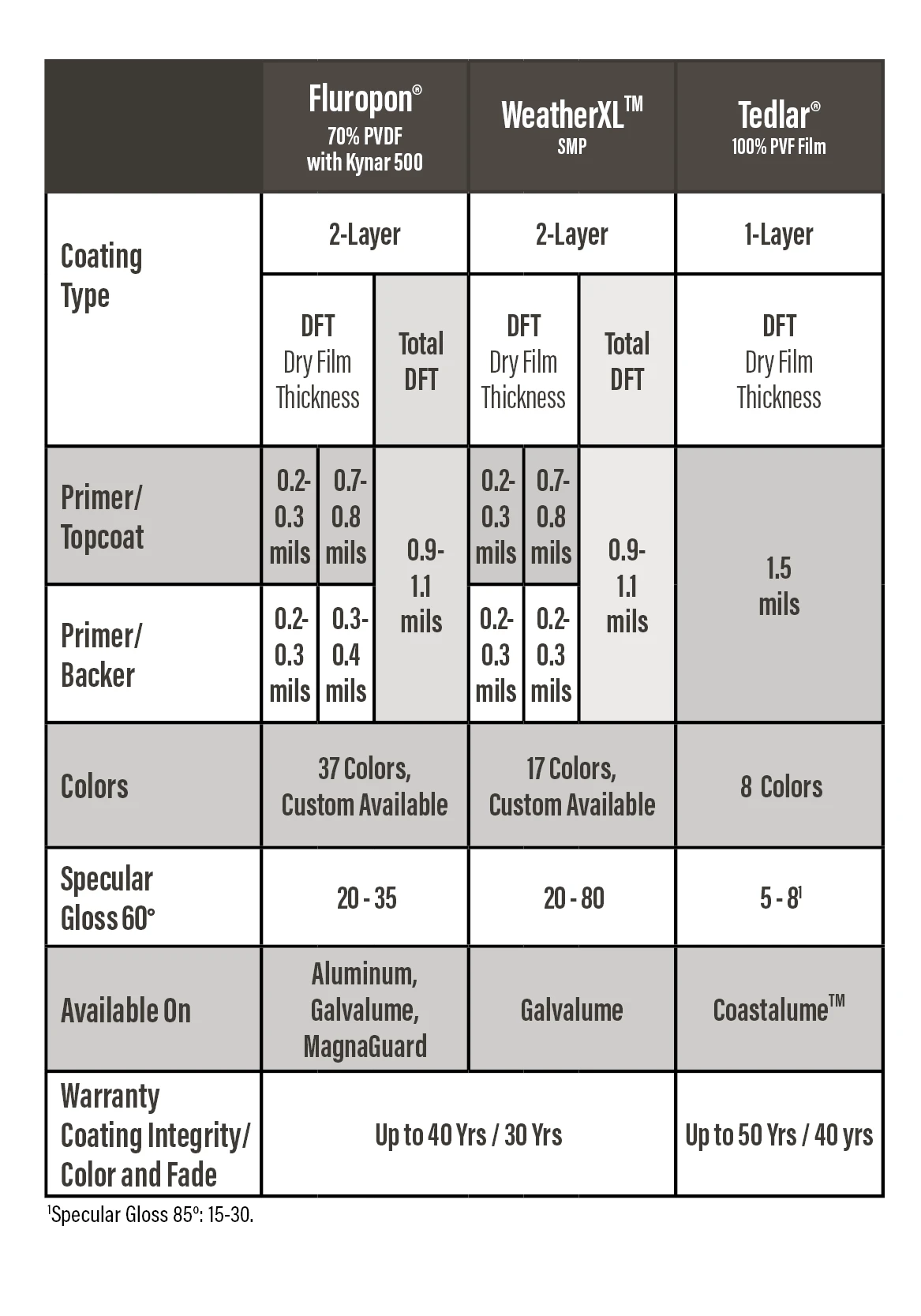
Paint color coating systems provide an additional layer of protection to steel and aluminum substrates, including Fluropon® PVDF w/ Kynar 500® for premium color and fade resistance, and WeatherXL™ SMP for dependable everyday performance. Designed to withstand UV exposure, moisture, heat, salt, and pollutants, these premium metal coatings deliver proven durability in even the harshest environments. With exceptional resistance to chalking, fading, and weathering, you can ensure your metal roof and wall panel systems maintain their vibrant color and lasting performance for years to come.
New! Coastalume™ Steel combines Galvalume® with Dupont™ Tedlar® PVF film to deliver advanced protection that's engineered and warrantied specifically for steel projects in coastal environments.
COATINGS QUICK REFERENCE
EXPLORE PROTECTIVE METAL COATINGS
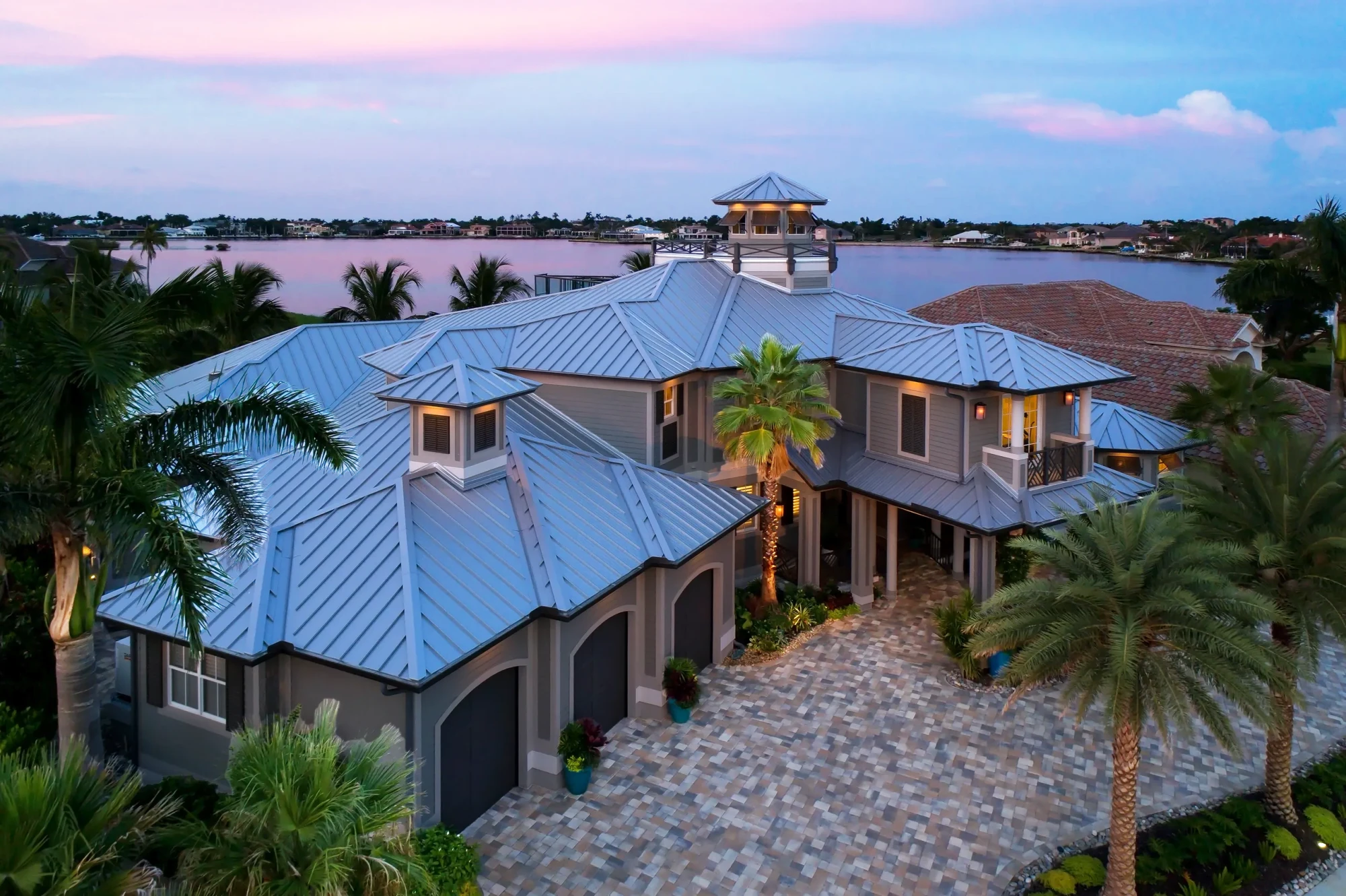
Keeping it Cool and Green!
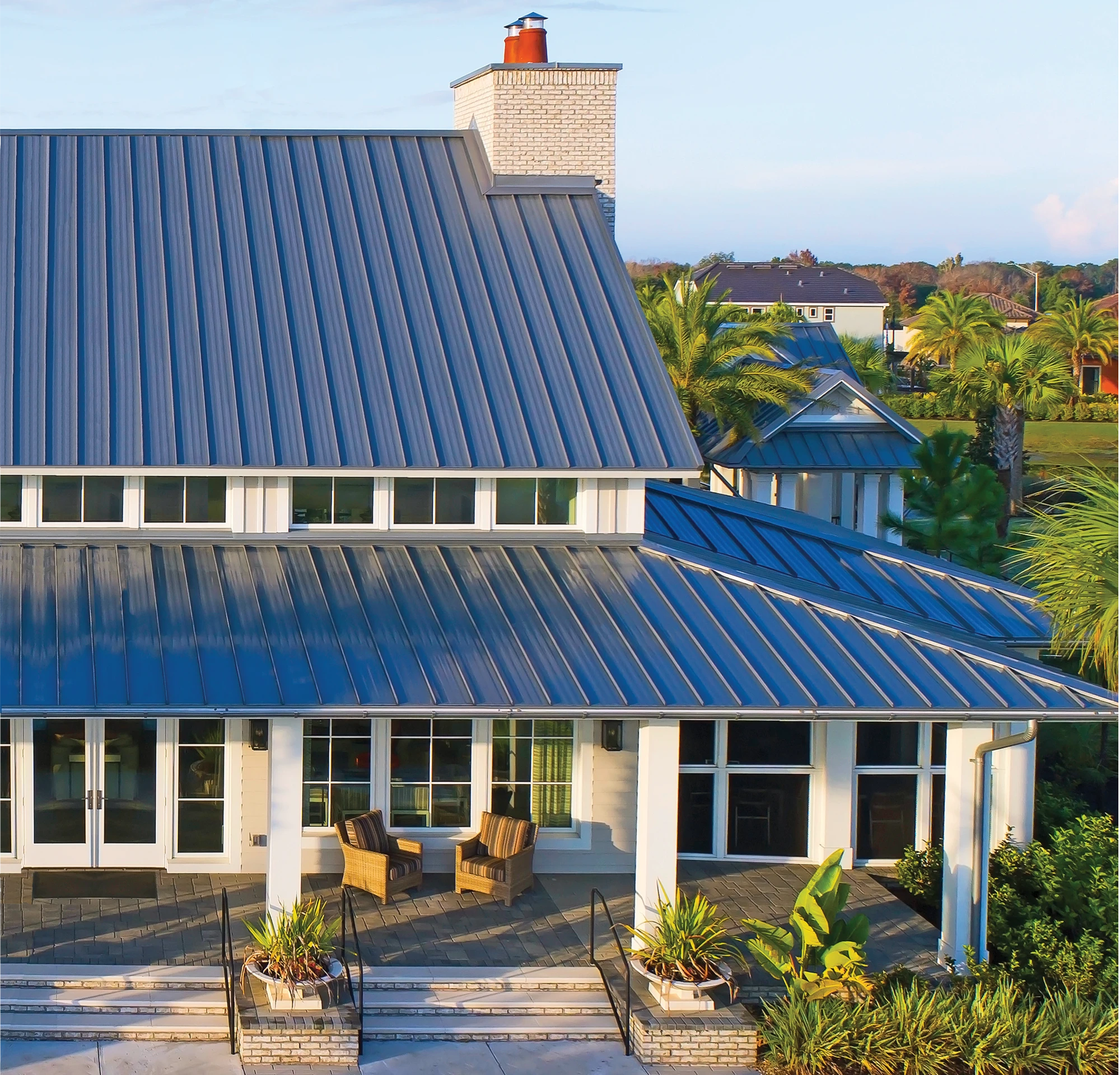
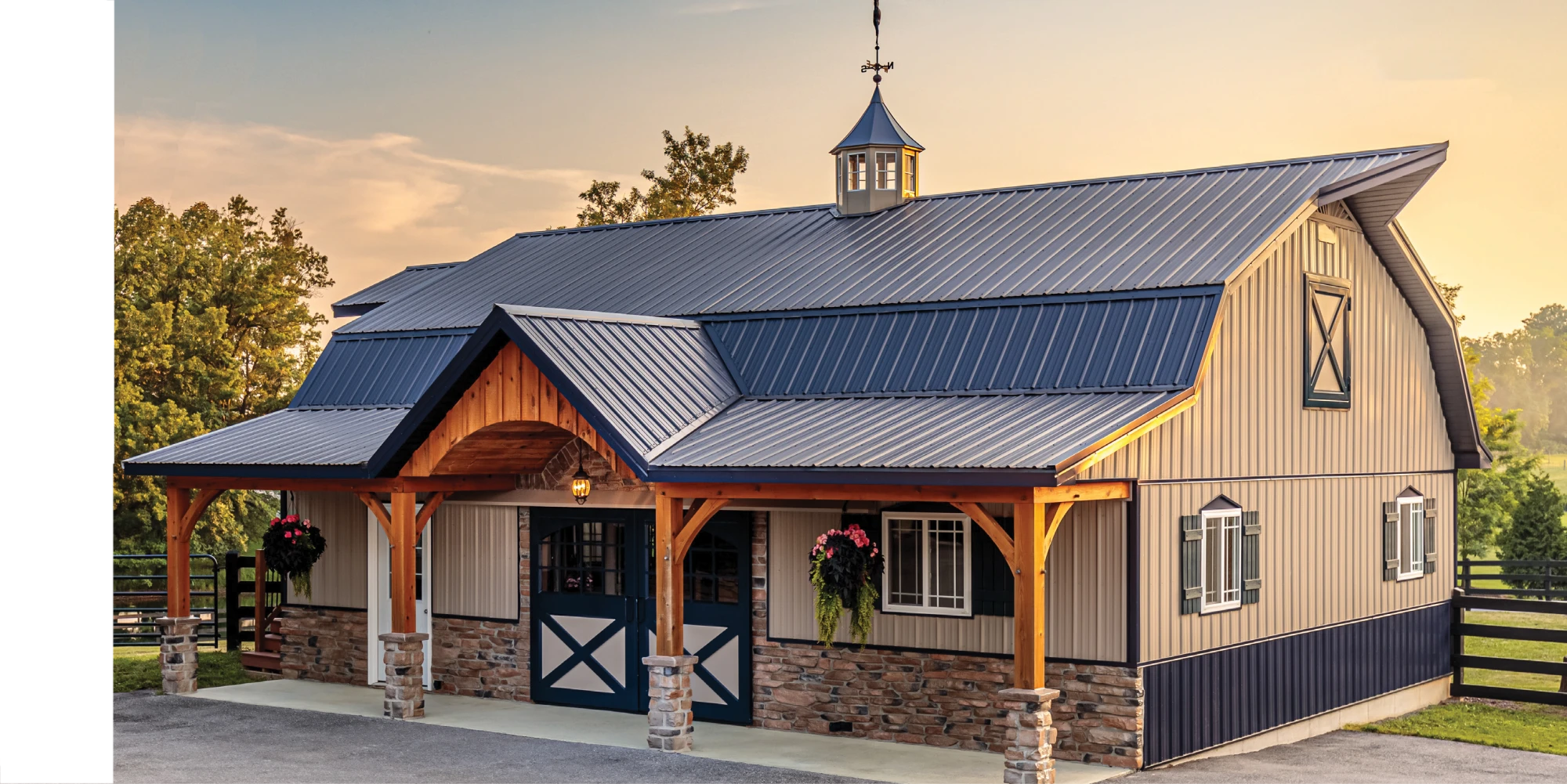
Metal panels with protective coatings aren’t just durable - they’re an eco-friendly choice for modern construction. These coatings enhance energy efficiency by reflecting sunlight and helping buildings stay cooler, reducing the need for excess energy use. With the right type and color, metal coatings can even help minimize the urban heat island effect, where hard surfaces like roofs and roads trap and radiate heat compared to natural landscapes such as trees and water.